

It’s about time to address the never-ending debate among coaches, is there an “ideal” arm action both throwing and non-throwing arm for baseball players? Simply put…we have no idea, and to create absolutes is simply moronic, yet in the baseball coaching world everyone seems to have it figured out.
Here’s my take on some methodologies about upper body throwing mechanisms I have seen, and so called “anatomical absolutes” and how they relate to energy movement throughout the kinetic chain.

If you haven’t read Driveline Baseball’s “Hacking The Kinetic Chain” and their section about Upper Body throwing mechanics, specifically The Arms: Separation, Pickup, Disconnection, Elbow Spiral, Driveline, Recovery on pages 24-35 you need to figure it out and educate yourself. Their programming and mentorship from the one and only @flamadgaf (give him a follow on Instagram) saved my career and got me back to throwing low to mid 90’s after years of being “domed up” after labrum surgery.
I had an awesome conversation with Anthony Brady, biomechanist at Driveline Baseball @baseballfreak12 (follow on Instagram) , about the relationship between maintaining elbow flexion inside 90 degrees into the driveline phase and reduced elbow valgus stress. To translate that into simpler terms, I wanted to know his thoughts on if maintaining elbow position of the throwing arm at or inside 90 degrees showed reduced stress on the elbow?
To my surprise over the course of a 20 minute conversation, he was actually investigating that concept and expanding it even further, how the “timing” of kinetic checkpoints could be more influential on reduced stresses then the actual positions themselves and how throwing drills can be improved and adjusted to impact elbow stresses. The blending of biomechanical data and throwing checkpoints, this was when his biomechanical skeleton overlays and analysis hit the web, if you haven’t seen them they are a must. Here’s a still of one below:

Driveline Baseball breaks down arm action into its simplest form, for me it put a lot of my thoughts into words and expanded it 10 fold. Here’s a quick summary without getting too technical of the six phase progression of arm action:
Separation:Throwing hand separation from glove downward
Pickup:Forearm and wrist move upward either into elbow retraction or toward second base
Disconnection: Scapular retraction of lead arm in unison with throwing arm without opening front shoulder
Elbow Spiral:At front foot strike, forearm close to vertical with hand in neutral position, elbow begins slightly upward path into external rotation
Driveline:From external rotation into ball release, maximize time between external rotation and internal rotation of throwing shoulder
Recovery: Accept force into deceleration
Here’s a frame by frame video of me throwing during the offseason going into my second year of professional baseball in the Frontier League. Can you see all of the six phases of arm action?
There are so many ideas and arm action concepts publicized on social media, so let’s address a few key ones and stir the pot.

“The Pocket” originally publicized by Dave Coggin of PFA @pfastrong1 with poster-boy Joe Kelly, has created a ton of buzz in the baseball world. In short, the concept is based off an efficient pickup phase, maintaining a degree of elbow flexion of 90 and below into the following phases of the throwing motion. I am a fan of this concept because of its ability to create movement that is easily replicable, producing consistent results regardless of pitch type. Dave has developed a ton of plyo throwing drills to reinforce this concept and promote proprioception from youth to professionals. Although this a theory based on subjective information, I think it is beneficial for encouraging proper pickup phase which in turn follows suit throughout the movement.

“Equal & Opposite” a concept that was publicized by coaching legend Tom House of NPA (National Pitching Association) and creator of the Velocity+ Arm Care and now rebranded Throw Smart throwing program. I participated in the Velocity+ Arm Care program at Keystone College, where I pitched for my final year of NCAA eligibility and then coached the following year. This theory based on subjective information can be immediately discredited from being an absolute by watching a Major League Baseball game…see 100 mph arm Tyler Glasnow below…

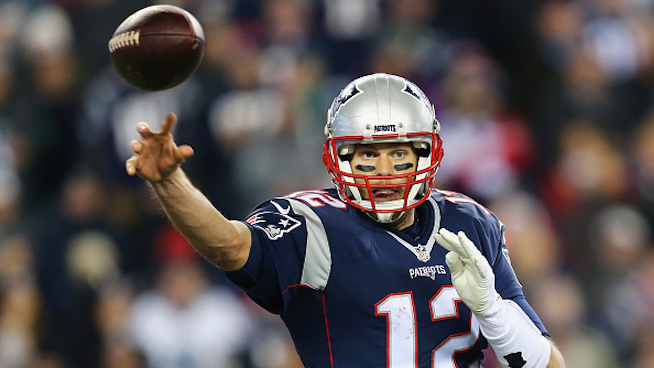
In an effort to prevent front shoulder rotation, the idea of bringing the chest to the glove was born, talk about replacing your glove with a huge stop sign. This became popular in football with guys such as Tom Brady and others. I have literally seen instructors teach pitchers to control their front arm like this… Does this position look like any pitcher you have ever seen?
Here’s National League Cy Young winner Jacob Degrom at similar release…

With that in mind, two completely different sports, with two athletes with completely different physiological makeups and biomechanical checkpoints. Yet, disconnection of lead arm is simply not achievable by forcing the “torso to the glove” or insert random external cue. I’m not going to go into stationary drills used by a certain association promote excessive shoulder abduction, and resemble the “Inverted W”, a phenomenon that shown to be problematic. (Driveline Baseball wrote a great blog post addressing this theory, go check it out https://www.drivelinebaseball.com/2010/09/strasburg-the-inverted-w-and-pitching-mechanics/)
To finish out my short rant about Tom House and his methodology of absolutes, his weighted ball throwing program is an absolute disaster and here’s a few reasons why.
1. Max effort holds & throws multiple days per week
2. Little to no individualization
3. No structured recovery protocols
4. No emphasis of strength training
5. Max effort throw with no ball or just towel
6. 2lb, 1lb & 2oz “Run and Gun” throws, ummm what
Who knows if the newly rebranded “Throw Smart” Tom House throwing program is altered from what it used to be, I sure hope so, max effort 3+ days a week…no thanks, luckily I am still intact.

Now for the throwback throwing 101 external cues such as “show the ball to second base, centerfield, ect.”, the staples of the old school throwing method, that is still in use today by youth coaches nationwide. Looking at old school cueing and the sequence of events that follow:
“Leg Lift and Balance Point”
“Ball down and away”
“Power Position (Lead elbow toward target, Baseball Facing Centerfield)
“Throw and Tuck the Glove”
“Finish out front and in Fielding Position”
This series of “mechanical checkpoints” are often labeled with numbers in a group setting in an effort to teach to the masses. Here are my thoughts…
Does momentum result in higher throwing velocity? YES, Velocity = Mass x Acceleration. So as pitchers, why wouldn’t we try and use momentum to our advantage down a slope? So, in theory, a “balance point” would be a break in momentum would it not?
Now, “ball down and away”, promoting elbow extension toward the ground or second base with itself not being an issue, but with athletes without levels of proprioception we may see excessive pronation or supination into elbow extension.
The infamous “power position” in itself actually being a piece of the kinetic chain, proper level of shoulder abduction, and the forearm being between 45-90 degrees ideally at foot strike. Yet, there is no emphasis in this sequence on the pickup phase, with zero emphasis on scapular retraction whatsoever.
Tucking the glove, or chest to glove, we covered earlier when talking about equal and opposite, but, “finish in a fielding position”, come on man. Talk about teaching a pitcher to not “lead leg block” and force excessive torso flexion toward the ground is just absurd.
According to Baseball Reference, during the 2018 MLB Regular Season, pitchers were involved in 5.31% of outs made in the field (Putouts & Assists), a whopping 6,926 out of 130,467 outs made. https://www.baseball-reference.com/leagues/MLB/2018-specialpos_p-fielding.shtml
I’m sure there are plenty of you reading this blog post being like:
“Way to teach players to not control their front arm”
“Look at this major league pitcher with his glove in front of his body”
“Throwing like that will get you hurt!”
“PFP needs to be a priority”
I’m going to leave all the readers with this: Absolutes. A death sentence for any coach without objective information backing up claims. Coaches, as much as you think you know, you don’t. A few years ago I thought I knew a good amount about throwing and the movement involved, guess what, I didn’t, and I am still learning EVERY SINGLE DAY.
Additional Sources:
Hacking The Kinetic Chain (Driveline Baseball) Matt Daniels & Kyle Boddy
 Essentials of Baseball Development
Well done Uncle Bob. I like it! Good info!
LikeLike